
Short-Form Learning (Micro-Lessons): The Creator's Guide to Teaching in 60 Seconds or Less
Key Takeaways
- 1
Micro-lessons — videos under 90 seconds built around a single, transferable skill — outperform long explainers on engagement when the hook captures a felt problem in the first 3 seconds.
- 2
Based on AskLibra data from 4 connected channels and 511 videos analyzed, short-form content delivers an average engagement rate of 0.0109 — a format that rewards tight scripting and zero filler.
- 3
The biggest mistake micro-lesson creators make is trying to teach a topic instead of solving one specific viewer pain point — a structural error that collapses watch time and kills algorithm reach.
- 4
Stacking micro-lessons into a serialized playlist transforms isolated views into a content neighborhood with compounding algorithmic authority and subscriber retention.
What Is a Micro-Lesson (and Why YouTube's Algorithm Rewards Them)
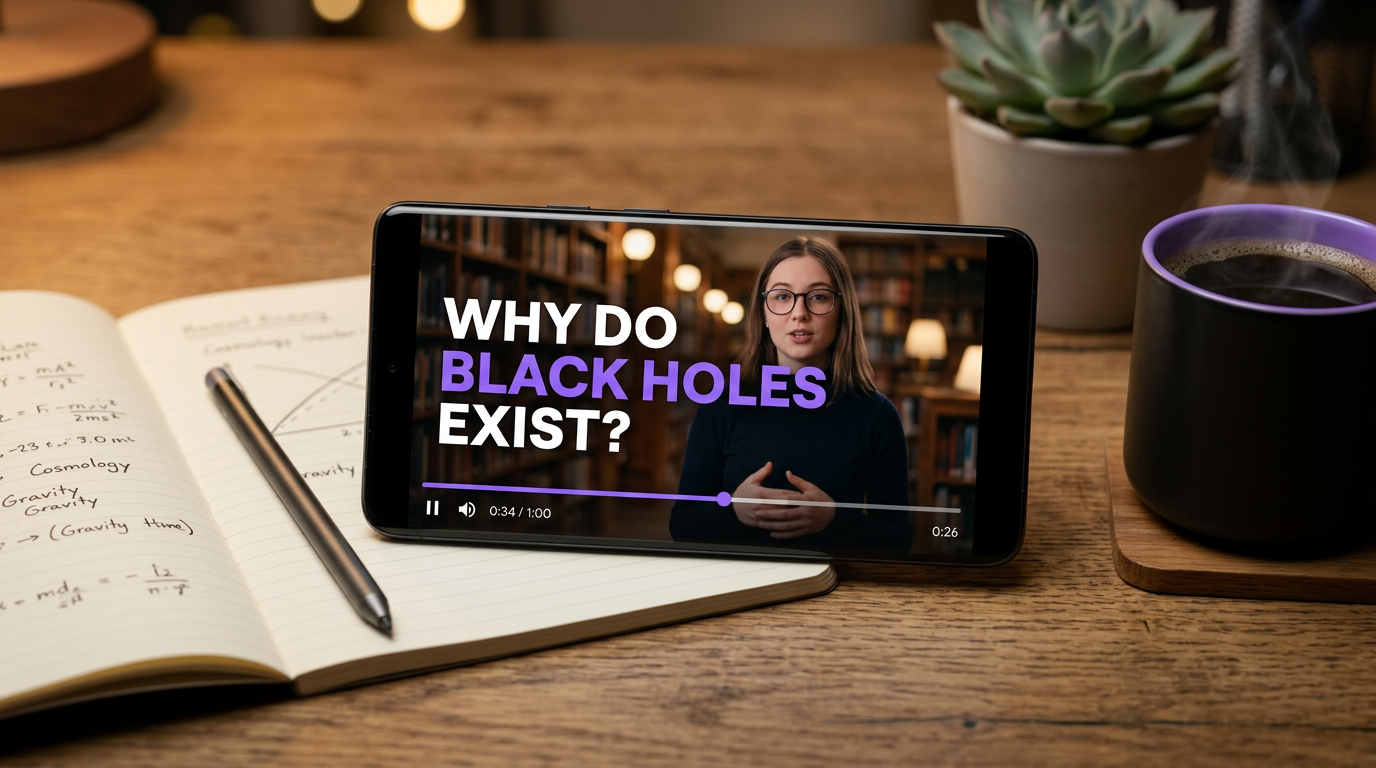
A micro-lesson is a self-contained video — typically 45 to 90 seconds — engineered to transfer one actionable skill or answer one specific question. Unlike a tutorial, which walks a viewer through a multi-step process, a micro-lesson resolves a single felt problem. Think: "Why does my audio clip in OBS?" not "The Complete OBS Setup Guide."
This distinction matters algorithmically. YouTube measures VSAT (Viewer Satisfaction Score) — a composite signal that weights watch time completion, likes, shares, and post-video behavior. A viewer who watches a 60-second video to 95% completion and immediately clicks another video sends a stronger satisfaction signal than a viewer who watches 40% of a 20-minute tutorial and leaves. If you want to understand how this metric drives channel growth, VSAT: The Only Metric That Matters for YouTube Channel Growth breaks down exactly how to track and improve it.
The Anatomy of a High-Performing Micro-Lesson
Every successful micro-lesson shares the same four-part structure. Deviate from it and you will feel the drop in retention within 48 hours of publishing.
1. The Problem Hook (0–3 seconds)
Your hook must name a pain point the viewer already feels, not a topic they should theoretically care about. "You're losing subscribers because your audio sounds like a phone call" converts. "Today we're talking about audio quality" does not. A strong hook is not clever — it is specific. For a deeper breakdown of what makes hooks work in the current algorithm environment, read Pattern Interrupt Hooks (2026 Edition): Stop the Scroll and Keep Viewers Watching.
Hook rate — the percentage of viewers who watch past the first 30 seconds of a video — is the single best leading indicator of whether your micro-lesson will be distributed broadly. A hook rate above 70% tells YouTube the title-to-content match is strong. Below 50%, distribution stalls regardless of how good the rest of the video is. To understand why this number controls your reach, see Why Your YouTube Hook Rate Is Killing Your Reach.
2. The Single Insight (3–45 seconds)
Deliver one idea. One framework. One technique. The most common failure mode for educator-creators is inserting context, backstory, or caveats that belong in a long-form video. In a micro-lesson, every sentence that does not move toward the solution is a sentence that moves a viewer toward the back button.
Write your script, then delete every sentence that answers "but what about..." — those are separate micro-lessons. This constraint is not a limitation; it is the product. Viewers subscribe to a channel that reliably solves small problems because they trust it will solve the next one too.
3. The Demonstration (45–75 seconds)
Show the concept in action with a real example, a screen recording, or a before/after comparison. Abstract explanations drop retention. Concrete visuals hold it. If you are teaching a writing technique, show two versions of the same sentence. If you are teaching a Lightroom adjustment, show the before and after on a real image. The demonstration is what converts a passive viewer into an active learner — and an active learner into a subscriber.
4. The Open Loop CTA (final 5 seconds)
End with a question or a partial answer that makes the next video feel necessary. "That fixes the audio clipping — but the reason your voice sounds thin is a different problem entirely" creates forward momentum. A generic "like and subscribe" does not. The open loop mirrors how good serialized content works: each unit resolves one tension while opening another.
Why Micro-Lessons Outperform Long-Form for New Channels
Long-form content (videos over 8 minutes) does produce higher average engagement on established channels — based on AskLibra data from 4 connected channels and 511 videos analyzed, longform averages an engagement rate of 0.0226 compared to 0.0109 for short-form. But that gap reflects audience loyalty, not format superiority. An established audience will watch a 20-minute deep-dive because they already trust the creator. A new viewer has no such trust.
For a channel under 5,000 subscribers, micro-lessons solve the trust deficit faster than any other format. A viewer who finishes a 60-second video feels satisfied. That satisfaction is the emotional precondition for a subscription. Serve that feeling ten times in a row and you have built a habit loop — which is the neurological foundation of subscriber retention.
This aligns with what researchers studying reward-based content patterns have called "Treatonomics" — the idea that short, complete, satisfying content units train viewers to return. The "Treatonomics" Movement: How Reward-Based Content Strategy Is Reshaping YouTube Channels maps out exactly how this psychological model applies to channel architecture.
Stacking Micro-Lessons: The Playlist Strategy That Builds Algorithmic Authority
A single micro-lesson is a discovery asset. A stack of 10 to 20 micro-lessons organized around a specific problem cluster is an authority signal. YouTube's recommendation engine is trained to identify topic clusters — groups of videos on a channel that consistently address related search queries — and reward them with sustained browse and suggested traffic.
A "retention curve" — the frame-by-frame graph showing what percentage of viewers are still watching at each moment — will look dramatically different for a serialized micro-lesson playlist versus a collection of unrelated shorts. Viewers arriving from an earlier video in the series have pre-built context, which means they watch longer and click through at higher rates. This is the compounding effect that separates a micro-lesson library from a collection of viral clips.
For a structured approach to building this kind of topic architecture, Topic Clustering and Content Neighborhoods: How to Organize Your YouTube Channel for Algorithmic Authority provides a practical framework for organizing educational content into algorithmic neighborhoods.
The Metrics That Tell You If Your Micro-Lesson Is Working
CTR (Click-Through Rate) measures the percentage of viewers who see your thumbnail and title and choose to click. For micro-lessons, a CTR below 3% signals a title or thumbnail mismatch — the problem you promised to solve is not landing clearly enough in the packaging. Above 6% means your framing is resonating.
Beyond CTR, the three metrics that matter most for micro-lessons are: hook rate (already defined above), average percentage viewed (the average completion percentage across all views — aim for 75%+ on sub-90-second content), and subscriber conversion rate (the percentage of unique viewers who subscribe after watching). If your completion rate is high but your subscription rate is low, your open loop CTA is not creating enough forward momentum.
For a clear breakdown of which channel metrics drive real outcomes versus which ones just feel good, 3 YouTube Metrics That Actually Matter (And 2 That Are Just Vanity) removes the guesswork. And if you want to move from reactive tracking to proactive planning, Predictive Social Analytics: How to Use Data to See What Your YouTube Channel Needs Before It Happens shows how to use channel data to anticipate what content your audience needs before they search for it.
Common Mistakes That Kill Micro-Lesson Performance
Teaching a topic instead of solving a problem
"5 tips for better writing" is a topic. "Why your email subject lines get ignored" is a problem. Micro-lessons built around problems get saved and shared. Micro-lessons built around topics get scrolled past.
Cramming two lessons into one video
Every time you add a second insight to a micro-lesson, you halve its completion rate and double its production complexity. Resist. The viewer who wants more will click the next video — which is exactly the behavior that drives your channel's algorithmic authority.
Ignoring search discovery
Micro-lessons are both social discovery content and search content. Titling a video with a conversational question ("Why does my mic sound muffled?") captures both browse traffic and YouTube search traffic simultaneously. Understanding how these two traffic sources work differently is essential — Social SEO: Discovery vs. Search — How YouTube's Two Traffic Engines Actually Work explains how to optimize for both without compromising either.
Frequently Asked Questions
How long should a micro-lesson video actually be?
The optimal length is as short as possible while still delivering a complete, actionable insight — typically 45 to 90 seconds. Padding a micro-lesson to hit an arbitrary length target is the fastest way to destroy your average percentage viewed score. If the lesson is complete at 55 seconds, publish it at 55 seconds.
Can micro-lessons work for complex or technical topics?
Yes — but the key is decomposing complexity into a series of single-concept units rather than compressing a complex topic into one short video. A topic like "machine learning for beginners" becomes a 20-video micro-lesson series, each episode covering exactly one concept. The series structure handles complexity; the format handles attention.
Should I use the YouTube Shorts format or regular video for micro-lessons?
Both have distinct distribution pathways. Shorts (vertical, under 60 seconds) are surfaced in the Shorts feed and reach cold audiences faster. Regular short-form videos (horizontal, 60–90 seconds) are indexed in search and suggested video feeds alongside related long-form content. For a micro-lesson library built for long-term discovery, horizontal format with strong title optimization will compound better over time.
How do I prevent micro-lessons from cannibalizing my long-form content?
They do not compete — they feed each other. Micro-lessons capture new viewers and funnel them toward longer deep-dives on the same topic. The micro-lesson answers the immediate question; the long-form video answers every follow-up question that emerges. Structure your playlist architecture so each micro-lesson links naturally to one long-form resource, and you will see longer session times across both formats.
How many micro-lessons do I need before the playlist strategy starts showing results?
Topic clustering effects typically become measurable after 8 to 12 videos on a consistent theme. Before that threshold, you are building individual assets. After it, you are building a content neighborhood that YouTube's recommendation engine can classify, index, and distribute to relevant audiences at scale.
Ready to see what the data says about your channel?
Stop guessing. Use AskLibra to get a personalized 90-day growth gameplan and find your perfect posting window.
No credit card required • Join 2,000+ creators